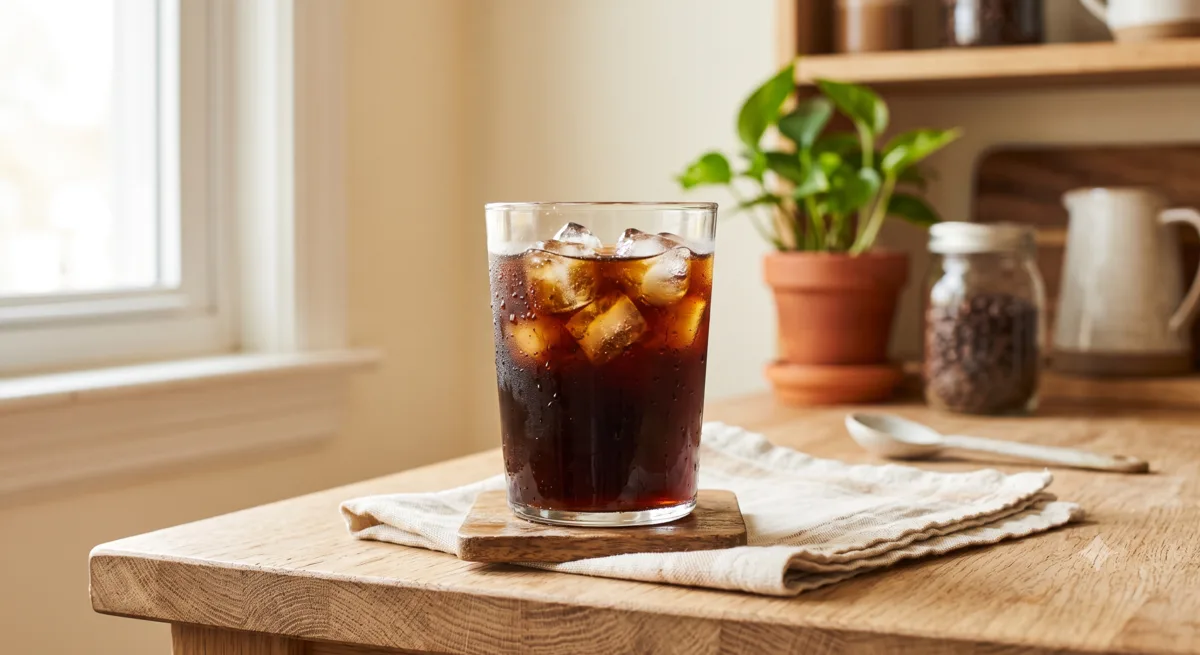
 COLD BREW
Cold Brew Ratio
The quick answer
Use a 1:4 coffee-to-water ratio by weight for cold brew concentrate (dilute 1:1 before drinking), or 1:8 for ready-to-drink cold brew poured straight over ice. Always measure by weight: 100g coffee to 400g water for concentrate, or 60g coffee to 480g water for ready-to-drink.
The single biggest variable in cold brew quality is not the coffee brand or steep time - it is the ratio. Get it wrong and no amount of good coffee will save the batch.
Ratio by weight is always more accurate than measuring by volume. Coffee grounds compact and fluff differently depending on grind size and roast level. Two cups of coarse-ground coffee can weigh very different amounts depending on how loosely they are packed. A kitchen scale removes that variable entirely.
A 1:4 ratio produces concentrate. One hundred grams of coffee to 400 grams of water gives you roughly 350ml of strained concentrate. Dilute that 1:1 with cold water or milk and you get about 700ml of finished cold brew - seven small servings or four generous ones over ice.
A 1:8 ratio produces ready-to-drink cold brew. This matches most bottled cold brews. It is weaker per ounce than concentrate but pours the moment it finishes steeping. If you prefer a lighter, less caffeine-heavy cup, start here.
Tweaking the ratio is how you personalize your brew. If the result tastes too strong, add 20-30g more water next time (moving toward 1:5 or 1:6). If it tastes thin, reduce water slightly. Small adjustments have a noticeable effect, so change one variable at a time and taste carefully.
Dial it in before you make it
Get the coffee-to-water ratio right for concentrate or ready-to-drink.
| Ingredient | Amount |
|---|---|
| Coffee grounds | 189.6 g |
| Coffee grounds (tablespoons) | 35.8 tbsp |
| Water | 948 g |
| Water (cups) | 4.00 cups |
Serving tip
Dilute 1:1 with water or milk to serve — this batch makes ~8.0 cups of ready-to-drink cold brew.
1 tbsp ground coffee ≈ 5.3 g · 1 cup water = 237 g · 1 fl oz water = 29.57 g. Steep 12–24 h in the refrigerator.
Make it
Makes 1 Varie
Ingredients
Steps
We brewed the same Colombian medium roast at every ratio from 1:4 through 1:10 to find where flavor, caffeine, and balance meet. For most home brewers, a 1:4 concentrate that you dilute to taste is the most flexible and cost-effective choice.
Pro tips
- Buy a cheap kitchen scale under $15 - it transforms cold brew consistency more than any other upgrade.
- Write the ratio on your jar with a marker so you always remember how to serve it.
- If sharing cold brew with guests, a 1:8 ready-to-drink batch avoids any confusion about dilution.
- For cold foam drinks, use a 1:4 concentrate base - the topping adds sweetness that needs bold coffee beneath.
- Dark roasts can taste harsh at 1:4. Try 1:5 or 1:6 if your concentrate tastes too intense.
Made this? How did it go?
Frequently asked questions
What is the standard cold brew ratio?
The most common ratios are 1:4 (coffee:water) for concentrate and 1:8 for ready-to-drink cold brew. Both are measured by weight for the most consistent, repeatable results batch to batch.
Can I measure cold brew ratio by volume instead of weight?
You can, but it is less precise. A rough guide: 1 cup of coarsely ground coffee to 4 cups of water approximates the 1:4 ratio, though actual weight varies by grind size and coffee density.
What happens if I use too little coffee in cold brew?
The brew will taste weak, watery, or flat. If your cold brew lacks depth, increase the coffee-to-water ratio next time - move from 1:8 toward 1:6 or 1:5 and taste the difference.
Does a stronger ratio mean more caffeine?
Yes. A 1:4 concentrate has significantly more caffeine per ounce than a 1:8 ready-to-drink brew. But once you dilute the concentrate 1:1, the caffeine per serving becomes comparable.
Is cold brew ratio the same for all roast levels?
Broadly yes, but dark roasts can taste more intense at the same ratio. If using a dark roast for concentrate, start at 1:5 and adjust from there to avoid an overpowering result.

Written by
Jack Shi
Jack Shi is an independent developer and the founder of CLOOMS, where he builds focused tools and web utilities — including Home Cafe Lab. He tests every recipe and guide in a real home kitchen, and his guiding principle is simple: find a real, specific need and solve it as plainly as possible.
View profile →Make these next
Get the Home Cafe Ratio Sheet
Every core ratio — cold foam, cold brew, latte, matcha, syrup — on one printable page. Free. No email needed, just print it.
Open the free ratio sheet →