 GUIDES
Best Milk for Frothing
The quick answer
Whole milk froths the best for hot lattes because its fat and protein balance creates stable, creamy microfoam. For cold foam, heavy cream or half-and-half produces the thickest, most stable result. Barista-edition oat milk is the best non-dairy option for frothing.
The milk matters as much as the technique. You can have the perfect frother and still get flat, watery foam if you're using the wrong milk for the job.
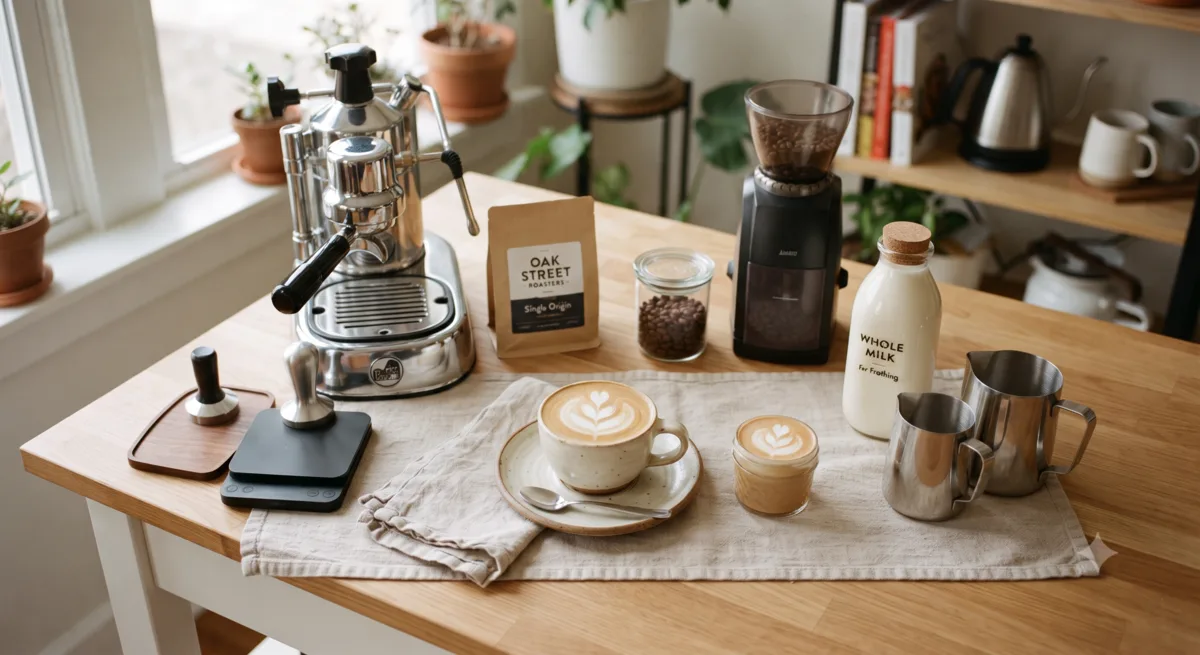
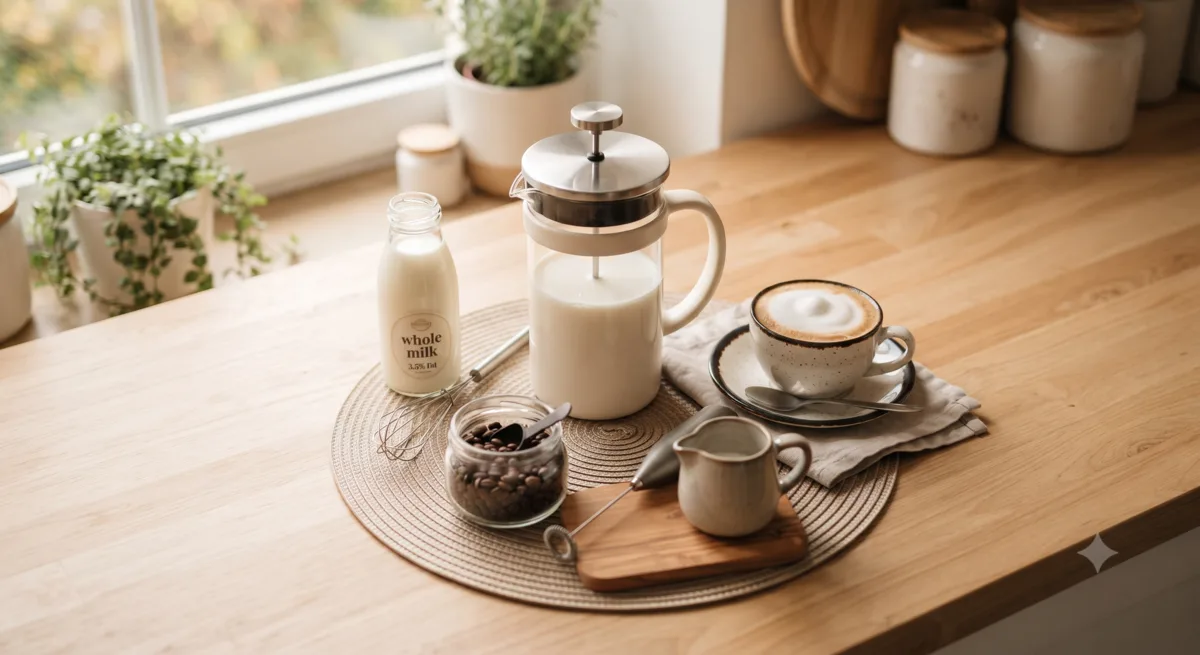
Whole milk is the gold standard for hot lattes. It contains enough fat (around 3.5%) to create creamy foam and enough protein to give the foam structure. The result is silky, stable microfoam that holds its shape through a full latte.
Skim and low-fat milk foam more easily and produce larger volume, but the foam is less stable and collapses faster. If you want a cappuccino with a thick, dry foam cap, skim milk can actually work well, as the bubbles are bigger and the texture is lighter.
Oat milk quality varies dramatically by brand. Regular oat milk often froths poorly because of its lower protein content. Barista-edition oat milks add stabilizers that mimic the frothing properties of whole milk, with notably better results.
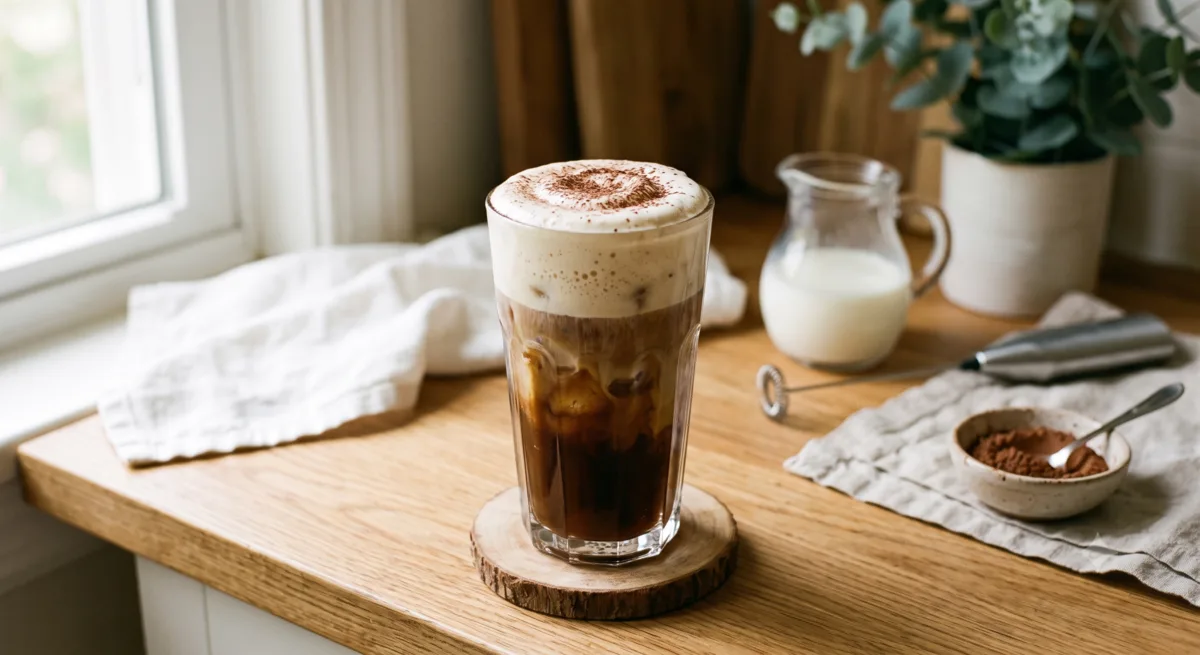
For cold foam specifically, the rules flip. You want heavy cream, half-and-half, or a mix of both. The higher fat content creates thick, spoonable foam that sits on top of cold drinks without sinking. Whole milk alone will work but produces a thinner foam.
What you need
Makes 1 Reference
Ingredients
How to do it
We've frothed every milk type in our kitchen across handheld, electric, and steam methods. The results are consistent: whole milk wins for hot drinks, heavy cream wins for cold foam, and barista oat milk is the best non-dairy all-rounder.
Pro tips
- Always start with cold milk for cold foam, and warm milk for hot lattes.
- Barista-edition plant milks are worth the slight price premium over regular versions.
- Whole milk at 150-155F produces the best microfoam, so do not overheat beyond 165F.
- Heavy cream cold foam is richer but more calorie-dense; half-and-half is a lighter option.
- Full-fat coconut milk can produce foam but has a strong flavor that not everyone enjoys.
Made this? How did it go?
Frequently asked questions
What milk makes the thickest foam?
Heavy cream produces the thickest cold foam by far, similar to lightly whipped cream. For hot drinks, whole milk makes the creamiest microfoam. The higher the fat content, the thicker and more stable the foam, though very high-fat milks can be harder to froth consistently.
Does oat milk froth well?
Regular oat milk froths inconsistently. Barista-edition oat milks are specially formulated with emulsifiers and extra protein to froth closer to whole milk. Brands like Oatly Barista and Califia Farms Barista Blend are the best options for home use.
Can you froth almond milk?
Almond milk froths poorly compared to dairy or oat milk. It has low protein and fat, which means the foam is thin and collapses quickly. Barista-edition almond milks perform better but still fall short of whole milk or oat milk in most cases.
What temperature should milk be for frothing?
Heat milk to 150-155F for hot lattes. This temperature produces silky microfoam without scalding the milk or developing a cooked flavor. Use a thermometer or stop steaming when the milk is hot to the touch but not burning your hand.
Why does my frothed milk always collapse?
Foam collapses when the bubbles are too large or the milk lacks enough protein and fat. Using whole milk or barista oat milk, keeping the temperature below 165F, and using a quality frother all help produce more stable foam that holds up longer.

Written by
Jack Shi
Jack Shi is an independent developer and the founder of CLOOMS, where he builds focused tools and web utilities — including Home Cafe Lab. He tests every recipe and guide in a real home kitchen, and his guiding principle is simple: find a real, specific need and solve it as plainly as possible.
View profile →Make these next

Get the Home Cafe Ratio Sheet
Every core ratio — cold foam, cold brew, latte, matcha, syrup — on one printable page. Free. No email needed, just print it.
Open the free ratio sheet →