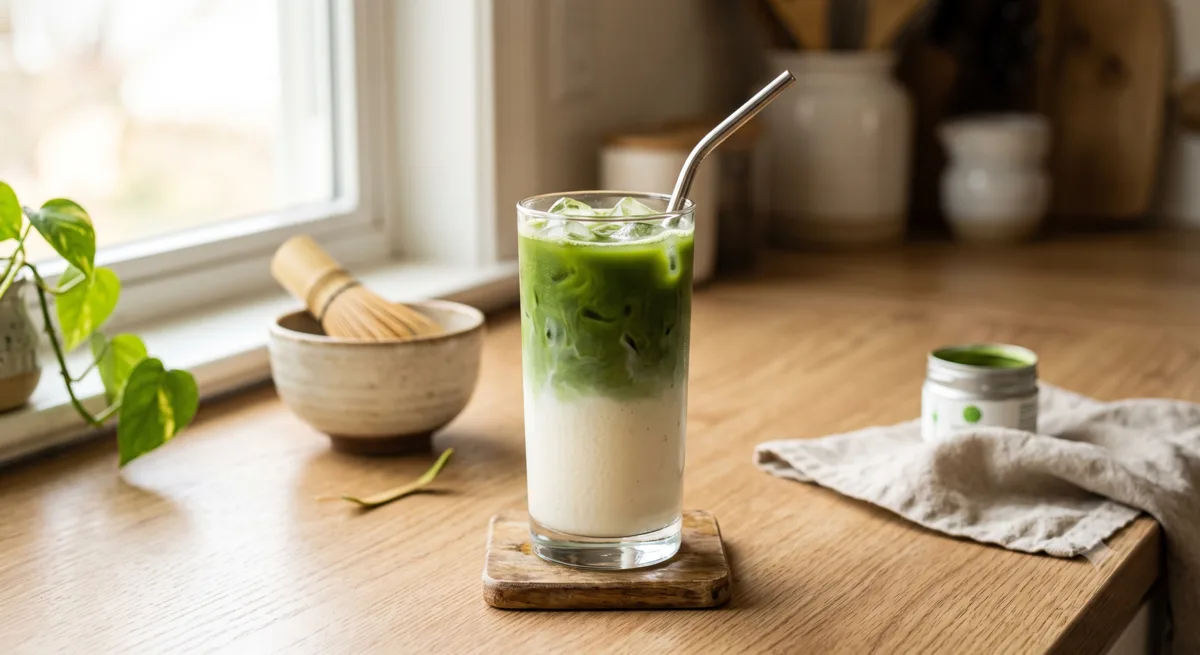
 MATCHA
How to Make Matcha
The quick answer
Sift 1 teaspoon of matcha into a bowl to remove clumps. Add 2 ounces of water heated to 175 F. Whisk in a rapid W or M motion for 20-30 seconds until no powder remains and the surface is lightly frothy. Use immediately as-is or as a base for lattes.
Most people make matcha bitter on the first try, not because of the powder, but because of two fixable mistakes: water that is too hot and skipping the sifting step.
Matcha preparation starts before water touches the powder. Sifting breaks apart clumps caused by humidity in the container. It takes under 10 seconds with a small mesh sieve and makes whisking faster and more effective. Without sifting, clumps can survive even aggressive whisking and create a gritty texture in the finished drink.
Water temperature is the single most important variable in matcha preparation. The ideal range is 160-185 F, with 175 F being the sweet spot for most ceremonial-grade powders. At this temperature, the water draws out the umami and sweetness of good matcha. Above 185 F, the heat denatures amino acids like L-theanine and produces a flat, harsh bitterness.
The whisking motion determines texture. A back-and-forth W or M motion moves the liquid in multiple directions and creates thousands of tiny air bubbles throughout. Circular stirring simply moves the liquid around one axis and takes twice as long to dissolve the powder fully. Aim for 20-30 brisk seconds rather than slow, deliberate strokes.
Grade selection shapes the flavor more than any other variable. Ceremonial-grade matcha is ground from the youngest, shade-grown tea leaves and has a fine texture, bright green color, and naturally sweet flavor. Culinary-grade uses more mature leaves, has a coarser grind, and carries more bitterness. For traditional preparation or lattes where matcha is the star, ceremonial grade is worth the extra cost.
Dial it in before you make it
Dial in matcha, water, and milk for a smooth, un-bitter latte.
Matcha Ratio Calculator
| Ingredient | Amount |
|---|---|
| Matcha powder | 1.5 tsp (3 g) |
| Hot / warm water (to whisk) | 2 fl oz |
| Milk (or milk alternative) | 10 fl oz |
| Suggested sweetener (honey / syrup) | 1.5 tsp |
- 1. Sift matcha into a bowl or cup.
- 2. Add 2 fl oz warm water (~175°F / 80°C) and whisk in a W-motion until smooth.
- 3. Pour over ice, add your milk, and sweeten to taste.
1 tsp matcha ≈ 2 g. Standard ratio is 1 tsp per 8 oz of drink.
What you need
Makes 1 serving
Ingredients
How to do it
After preparing matcha in both the traditional method (small bowl, chasen, small water volume) and the latte method (mug, frother, larger water volume), we found that the traditional sifting-and-whisking approach produces the cleanest-tasting base every time. It takes less than 2 minutes once you have the muscle memory for the whisk motion.
Pro tips
- Traditional matcha uses even less water: about 1 oz (30 ml) for a small ceremonial serving called usucha. For lattes, 2 oz is better because it creates a concentrate that holds up well against milk.
- Warm the bowl before adding water. Pour a little hot water in, swirl, and discard. This prevents the matcha from cooling too fast during whisking.
- The surface should look like fine foam, similar to a thin layer of tiny bubbles, when properly prepared. If you see liquid without foam, whisk for another 10 seconds.
- Store open matcha powder in an airtight container in the fridge or freezer. Exposure to air, heat, and light degrades flavor fast.
- A bamboo chasen typically lasts 3-6 months with daily use. Store it on a whisk holder (kusenaoshi) to preserve the tines.
Made this? How did it go?
Frequently asked questions
Do I need a bamboo chasen to make matcha?
No, but it helps. A handheld electric milk frother is the best substitute and costs under $12. A small metal whisk works in a pinch. A regular spoon or fork does not move the liquid fast enough to dissolve the powder well and usually leaves gritty residue.
Why does my matcha always taste bitter?
The two most common causes are water that is too hot and using culinary-grade matcha for drinking. Keep water below 185 F and switch to ceremonial grade. Under-whisking is a third cause: clumps that are not dissolved fully taste harsh. Sifting before whisking helps eliminate this.
How much matcha powder per cup?
For traditional thin matcha (usucha), use 1.5-2 grams (about 3/4 tsp) in 2-3 oz of water. For a matcha latte base, use 1 tsp (about 2 grams) in 2 oz of water. Adjust up or down based on how strong you like the matcha flavor.
Can I make matcha in advance?
You can prepare matcha concentrate and store it in the fridge for up to 24 hours in a sealed container. Shake or stir before using because the powder will settle. The flavor is best fresh, but a refrigerated concentrate is a practical shortcut for busy mornings.
What is the difference between matcha and green tea?
Green tea is made by steeping whole or ground tea leaves in water, then discarding the leaves. Matcha is whisked directly into water and consumed whole. This gives matcha a much higher concentration of antioxidants, caffeine, and L-theanine per serving than steeped green tea.

Written by
Jack Shi
Jack Shi is an independent developer and the founder of CLOOMS, where he builds focused tools and web utilities — including Home Cafe Lab. He tests every recipe and guide in a real home kitchen, and his guiding principle is simple: find a real, specific need and solve it as plainly as possible.
View profile →Make these next
Get the Home Cafe Ratio Sheet
Every core ratio — cold foam, cold brew, latte, matcha, syrup — on one printable page. Free. No email needed, just print it.
Open the free ratio sheet →