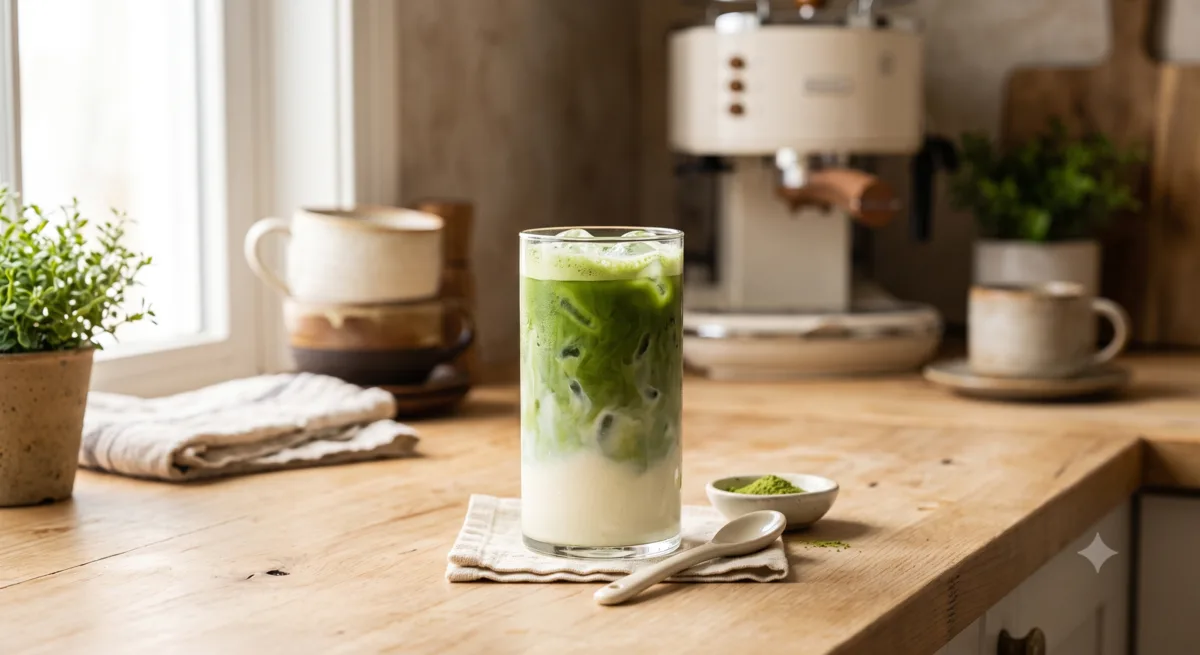
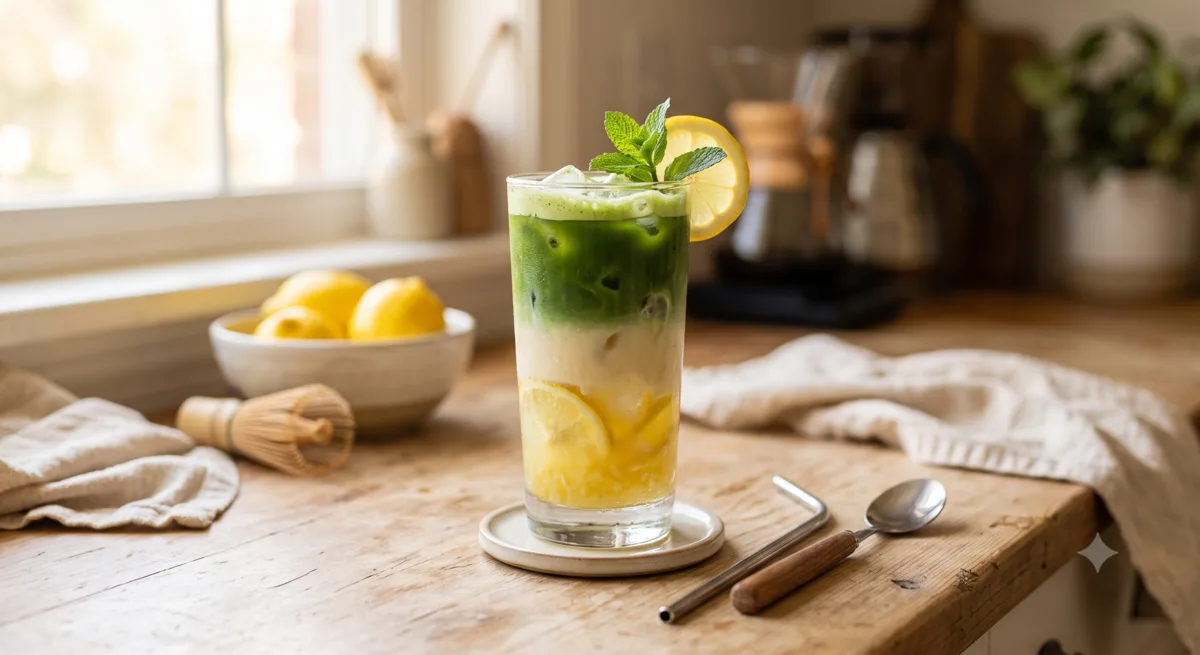
 MATCHAAI-generated illustration
Iced Matcha Latte
The quick answer
Whisk 1 teaspoon matcha with 2 US fl oz warm water. Add 8 US fl oz milk in a 16 US fl oz glass, then add ice only to fit the remaining space. Optional syrup displaces some liquid. The calculator defaults to this unsweetened recipe.
Worked example for this recipe
Iced Matcha Latte: these rows scale this card’s own ingredient inputs and convert its specified liquids with the site’s volume calculator. Ranges and solid ingredients are scaled without assigning a liquid volume. Volumes are before frothing or blending; ice, solid ingredients and finished yield are not predicted. Cup conversions use the approximate 236.6 mL convention.
| Ingredient input | 1× recipe | 2× recipe | 1× liquid conversion |
|---|---|---|---|
| matcha powder | 1 tsp matcha powder | 2 tsp matcha powder | Not converted to liquid volume |
| warm water | 2 fl oz warm water | 4 fl oz warm water | ≈ 59.15 mL |
| milk | 8 fl oz milk | 16 fl oz milk | ≈ 236.59 mL |
| honey or syrup (optional; displaces some milk or water) | 1–2 tsp honey or syrup (optional; displaces some milk or water) | 2–4 tsp honey or syrup (optional; displaces some milk or water) | Not converted to liquid volume |
The biggest mistake people make is dumping matcha powder straight into cold milk. The fix is a quick 30-second whisk in a small amount of 175 F water first. That blooms the powder and creates a smooth concentrate before the milk ever touches it.
Ceremonial-grade matcha makes a noticeable difference here. Culinary-grade works fine in baked goods, but it can taste grassy or metallic when the matcha is the star of the drink. Ceremonial grade has a smoother, slightly sweet flavor that shines through milk without needing extra sweetener.
Sifting matcha before whisking is optional but worth the 10 seconds it takes. Matcha clumps in the container from humidity and static. Running it through a small fine-mesh sieve before adding water gives you a silkier texture and makes whisking faster.
The water temperature matters more than most people realize. Boiling water (212 F) scorches matcha and produces a bitter, harsh flavor. Water around 170-180 F coaxes out the umami and slight sweetness that makes a great latte. A kettle with temperature control is the easiest solution, but letting boiled water sit for 2 minutes works just as well.
Vanilla and oat-milk variations
For vanilla matcha, use vanilla syrup as the optional sweetener and subtract its volume from the milk so the cup still has room for ice. For the oat-milk version, replace the milk with the same volume of oat drink. Check its label for ingredients and nutrition.
Calculate this preparation
Iced matcha latte proportions
- Cup capacity
- 16 fl oz
- Reserved for ice / headspace
- 6 fl oz
- Total liquid volume
- 10 fl oz
- Matcha powder
- 1 tsp (≈ 2 g)
- Whisking water
- 2 fl oz
- Milk
- 8 fl oz
- Sweetener volume used
- 0 tsp
Default matches the iced matcha recipe: 1 tsp powder, 2 fl oz water, 8 fl oz milk, optional sweetener omitted. Reserving 37.5% of a 16 fl oz cup is an editable ice/headspace assumption. Normal = recipe amount; Light = ¾ and Strong = 1½ times that powder. Sweetener replaces some water and milk. Actual ice packing varies; do not fill beyond the cup.
Make it
Makes 1 drink
Ingredient amounts and alternate units scale together. Times, temperatures and device sizes stay unchanged; use multiple batches or vessels when needed. Ingredient amounts in the steps scale with the list.
Ingredients
Steps
Preparation notes
- Use the calculator to choose a different cup capacity or ice share.
- Matcha mass per teaspoon varies with powder and packing; weigh yours if needed.
- The calculator’s 2 g/tsp is an editable approximation, not a brand specification.
Was this page helpful?
Private feedback stored only in this browser; it is not sent to Home Cafe Lab.
Frequently asked questions
What matcha grade should I use for an iced latte?
Use ceremonial-grade matcha for the cleanest, sweetest flavor. Culinary-grade can taste bitter and grassy when consumed straight in a latte. Brands like Ippodo, Encha, or Jade Leaf ceremonial are widely available online and in Whole Foods.
Can I make an iced matcha latte without a whisk?
Yes. Use a small electric milk frother or a sealed jar. Add the matcha and hot water, then shake the jar vigorously for 30 seconds. A frother works even faster.
Why is my iced matcha latte bitter?
Bitterness usually comes from water that is too hot (above 185 F) or from using culinary-grade powder. Try dropping your water temperature to 170-175 F and switching to ceremonial grade. Under-whisking can also leave bitter clumps in the drink.
How many calories are in a homemade iced matcha latte?
Nutrition depends on the exact ingredients and serving size. Use the values on your milk, syrup and other ingredient labels with the drink calorie calculator; no fixed calorie total is claimed here.

Written by
Hommer Zhao
Hommer Zhao is the founder and general manager of Home Cafe Lab. He runs the site and is responsible for its recipes, calculators and guides.
View profile →Make these next
Get the Home Cafe Ratio Sheet
Every core ratio — cold foam, cold brew, latte, matcha, syrup — on one printable page. Free. No email needed, just print it.
Open the free ratio sheet →