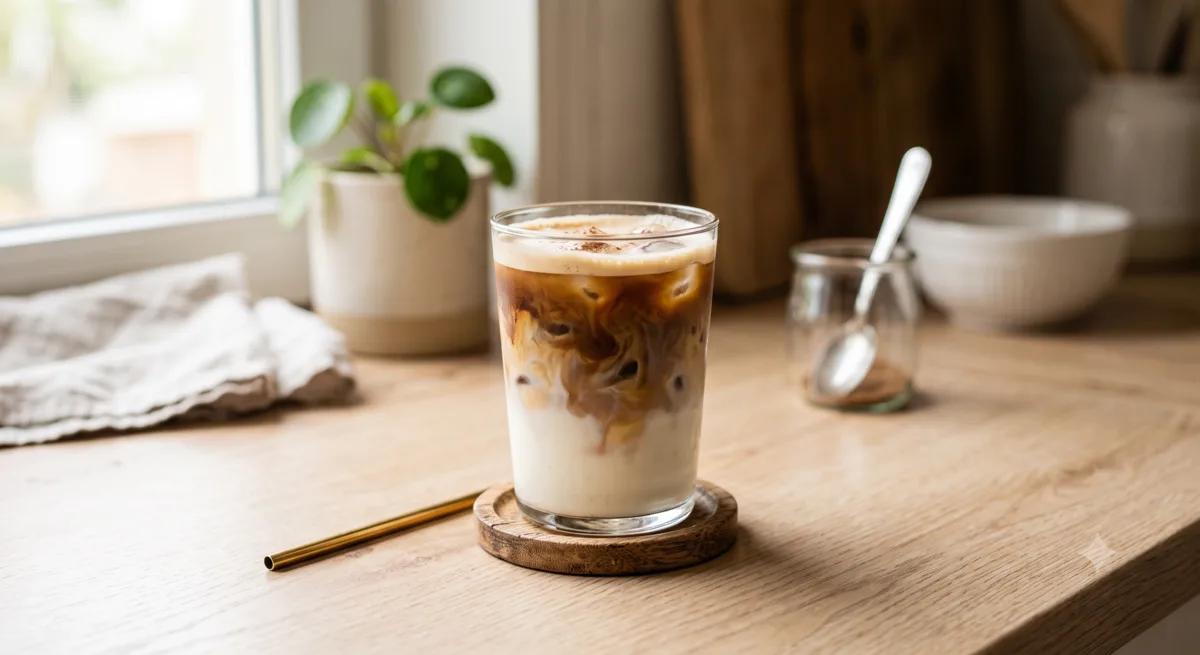
 LATTESAI-generated illustration
Iced Latte at Home
The quick answer
For a 12 US fl oz glass, use 2 espresso shots (60 mL), about 162 mL cold milk and ice to fit (about 133 mL space). For 16 US fl oz, use 2 shots (60 mL), 236 mL milk and ice to fit (about 177 mL space). Stir espresso and milk, then add ice. We use about 30 mL (≈1 US fl oz) per shot for cup planning; actual yield varies. These unsweetened plans reserve 37.5% of the glass for ice.
Iced latte ratio chart
Choose your glass size. Use the first milk amount for a plain latte, or the second with the optional syrup amount in the last column. These are starting proportions for this recipe; adjust to your taste.
| Glass (US fl oz) | Espresso shots / mL | Plain espresso:milk | Milk, plain / sweetened (mL) | Ice space, approx. (mL) | Optional Light syrup pumps / mL |
|---|---|---|---|---|---|
| 8 | 1 / 30 | 1:3.9 | 118 / 110 | ≈ 89 | 1 / 7 |
| 12 | 2 / 60 | 1:2.7 | 162 / 147 | ≈ 133 | 2 / 15 |
| 16 | 2 / 60 | 1:3.9 | 236 / 214 | ≈ 177 | 3 / 22 |
| 20 | 3 / 90 | 1:3.1 | 280 / 250 | ≈ 222 | 4 / 30 |
| 24 | 3 / 90 | 1:3.9 | 354 / 317 | ≈ 266 | 5 / 37 |
Scroll the chart sideways for ice and syrup amounts; on small screens, the cup-size column stays in view.
Calculated 2026-10-31. This house planning choice assigns one shot per 8 US fl oz of glass capacity, rounded up: 1, 2, 2, 3 and 3 shots. We use about 30 mL (≈1 US fl oz) per shot for cup planning; actual yield varies. This schedule changes the plain espresso:milk ratio across sizes.
Method: convert glass capacity using 1 US fl oz ≈ 29.57 mL; reserve 37.5% for ice, then subtract espresso and optional syrup to find the milk amount. Calculations keep full precision until display rounding. Ice space means approximate displacement in the drink, not loose-cube volume or ice weight; add ice only to fit below the rim.
Brew your usual espresso recipe, using dry dose and brewed yield by mass from the espresso ratio calculator. Then measure the beverage volume and adjust the milk: more espresso means the same volume less milk, and less espresso means more milk. Never extend extraction to hit 60 mL; that is a cup-planning amount, not a brew target.
How to make an iced latte
Makes 1 drink — 12 US fl oz glass, including ice
iced latte ingredients
iced latte steps
Iced latte sweetener and flavor variations
Start plain, or use the chart’s optional Light syrup suggestion: one pump per 4 US fl oz of cup capacity, minus one pump. It is a house starting point, not a sweetness standard. The conversion uses the Torani pump for 750 mL bottles, specified as ¼ fl oz per pump (about 7.39 mL; retrieved 2026-10-31). Measure your own dispenser if it differs. The syrup amount calculator — choose Light / 12 oz suggests two pumps for this glass. Set “Number of pumps” to 2 and select the Torani 750 mL bottle pump, or enter your measured pump size. The size selector ends at 20 oz; for the chart’s 24 oz Light plan, enter 5 in “Number of pumps” to convert its syrup volume.
For vanilla, caramel or hazelnut iced lattes, substitute that flavored syrup in the same measured slot. For mocha, start with a little chocolate sauce and stir it into the warm espresso before adding milk; measure sauce separately instead of treating a sauce pump as a syrup pump. Skip the syrup when you prefer the drink unsweetened.
How to make an iced latte without an espresso machine
Strong brewed coffee or moka-pot coffee for an iced latte
For a complete machine-free method, follow the phin filter brewing steps in our Vietnamese iced coffee recipe. Use its coffee and water quantities, but brew into an empty heatproof cup without the condensed milk or ice. Let the coffee finish dripping, then measure the plain brewed output, not the input water. If using a moka pot instead, brew according to its maker’s instructions and measure the finished coffee in the same way.
For the plain 12 US fl oz chart row, take 60 mL of that coffee in place of the espresso and add about 162 mL cold milk: about 222 mL total liquid, matching the chart before ice. Save any remaining brewed coffee separately; do not pour the whole batch into the glass. If you prefer more coffee, replace an equal volume of milk to keep that total fixed. For the sweetened row, use its reduced milk and syrup amounts instead. Add ice gradually within the same allowance. Equal coffee volumes do not guarantee equal strength; this is a volume substitution, not an espresso extraction equivalent.
Cold-brew concentrate swap: calculate coffee and milk
For a cold-brew version, choose a concentrate-to-milk dilution first. Follow the bottle’s directions if using purchased concentrate. For an example with one part concentrate to one part milk, the 12 US fl oz glass leaves 221.8 mL for liquid after its ice allowance: 221.8 ÷ 2 = 110.9 mL concentrate plus 110.9 mL milk, with no syrup. This replaces both the espresso and milk amounts in the chart. It balances volume; it does not claim the same strength or caffeine as espresso.
Prepare the cold-brew concentrate recipe ahead of time and measure its filtered yield. Use the cold-brew calculator to change batch quantities and dilution. As a separate batch example, 600 mL measured concentrate plus 600 mL milk makes 1200 mL liquid: enough for 5.41 of these pre-ice portions, or five full glasses and a remainder. Ice is added separately to each glass.
Milk choices for an iced latte
Use cold milk directly in this recipe; there is no steaming or frothing step. Whole milk is used in the Good Food iced latte recipe, while the Starbucks at Home recipe uses semi-skimmed milk and allows a dairy alternative (both retrieved 2026-10-31). Choose the milk or oat, soy or almond drink you already enjoy, and measure the same volume. Taste before adding syrup, particularly if you chose a sweetened milk alternative. This recipe does not require a barista formulation or a foam topping.
For an optional topping, try our cold-foam recipe. Reserve room for the expanded foam by using less milk and adding ice only to fit; spoon on the topping below the rim instead of adding it to a full glass.
Iced latte ice and dilution: avoid a watery drink
Add ice just before serving and start with cold milk. The chart reserves space for ice but does not predict how quickly it melts. Add cubes gradually, leaving room to stir. For coffee ice, freeze brewed coffee in an ice tray and use it instead of water ice; the melt then adds coffee rather than plain water. The result depends on the coffee you froze, so keep the same cube recipe when comparing drinks.
To adjust the next glass, change one amount at a time. Try less milk for a more coffee-forward proportion, or replace some milk with more measured coffee while keeping the liquid total fixed. Do not simply pour extra coffee into an already full glass.
Iced latte vs iced coffee
The distinction is the coffee base: an iced latte combines espresso with cold milk and ice; iced coffee can use brewed filter coffee over ice. Try our flash-brew iced coffee guide for a filter-coffee recipe. Compare the Starbucks iced latte with its iced pour-over method (both retrieved 2026-10-31). In this guide, a moka-pot or cold-brew version is a substitute for the espresso-based recipe. Adding milk to brewed coffee does not change the way that coffee was extracted.
Espresso dose → yield
- Target yield in cup
- 36 g
- Dose : yield (mass)
- 1:2
Yield is brewed espresso on the scale, not input water. Volume depends on crema and density, so no fl oz estimate is supplied.
Was this page helpful?
Private feedback stored only in this browser; it is not sent to Home Cafe Lab.
Iced latte recipe questions
What is the ratio of espresso to milk in an iced latte?
In this unsweetened recipe, espresso:milk is about 1:2.7 for a 12 US fl oz glass and 1:3.9 for a 16 US fl oz glass, before ice melts. Both use 2 shots counted as 60 mL total. The ratio changes with cup size because the chart keeps whole shots and reserves space for ice.
How do I make an iced latte without an espresso machine?
Follow the phin brewing procedure linked in the no-machine section, leaving out its condensed milk and ice, then measure the plain coffee into the chart’s espresso slot. Moka-pot coffee can also fill that slot. If you use more coffee, use equally less milk to keep total liquid unchanged. For cold-brew concentrate, use the concentrate-to-milk calculation above. Equal volumes do not guarantee equal coffee strength.
How do I keep an iced latte from getting watery?
Start with cold milk, add ice just before serving and drink promptly. For coffee ice cubes, freeze brewed coffee in an ice tray and use them in place of water ice. Count them within the same approximate ice allowance; their coffee concentration depends on what you froze.
How much syrup should I add to a 12 oz iced latte?
Start unsweetened, or try 2 pumps (about 15 mL) with the specified Torani pump. Use about 147 mL milk instead of 162 mL to leave the same ice space. This is a serving suggestion; adjust sweetness to taste and measure other pumps separately.
Can I make this iced latte with decaf?
Use decaf espresso for the same recipe and volume plan; caffeine content depends on the coffee and how it is brewed.

Written by
Hommer Zhao
Hommer Zhao is the founder and general manager of Home Cafe Lab. He runs the site and is responsible for its recipes, calculators and guides.
View profile →More latte recipes to make at home


Get the Home Cafe Ratio Sheet
Every core ratio — cold foam, cold brew, latte, matcha, syrup — on one printable page. Free. No email needed, just print it.
Open the free ratio sheet →