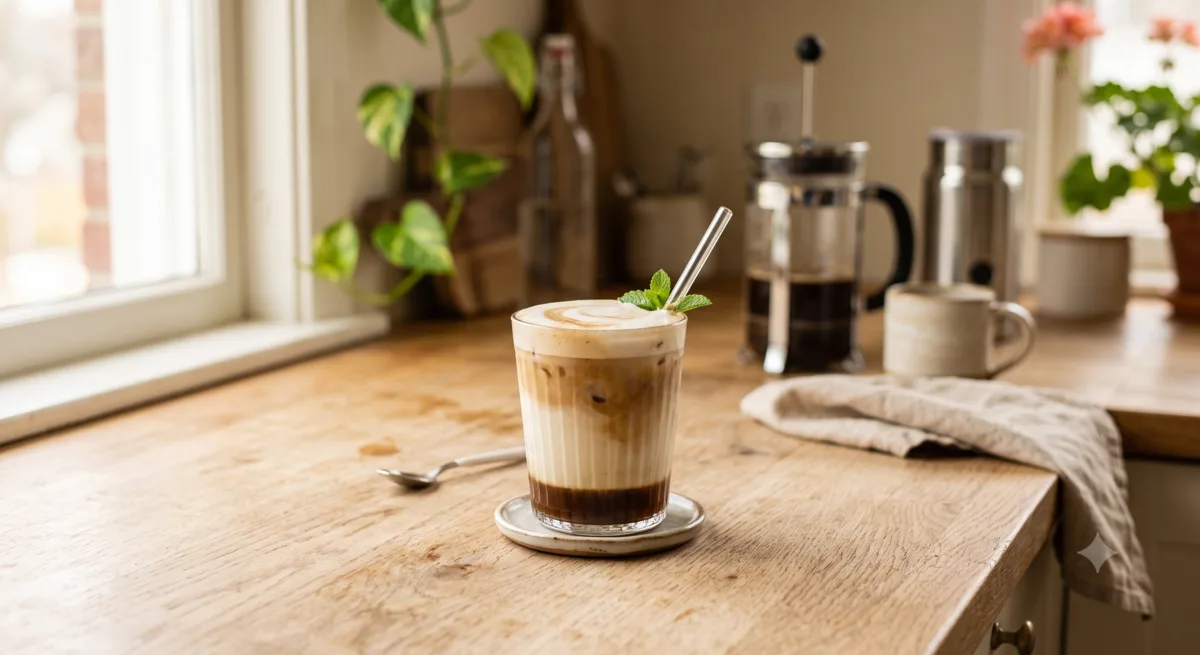
 LATTES
Latte Without an Espresso Machine
The quick answer
You can make a latte without an espresso machine using a moka pot (best option), AeroPress with fine grind, strong instant coffee, or a French press. Brew 2 oz of concentrate, froth 6 oz of milk with a handheld frother, and combine at a 1:3 ratio. The moka pot comes closest to real espresso.
No espresso machine? Good -- you have four solid options that produce lattes most people can't tell apart from the machine version in a blind taste test.
The moka pot is the gold standard for espresso-free lattes. It brews at 130-145 psi, extracts dark, concentrated coffee with a slight crema layer, and costs $25-40. A 3-cup moka pot brews about 2 oz per round -- which is exactly the right base for an 8 oz latte. Use a fine-to-medium grind and medium-low heat for the cleanest extraction.
AeroPress is the most versatile option. Use 20 grams of finely ground coffee, 2 oz of hot water at 200 degrees F, press slowly over 1 minute for a rich concentrate. The AeroPress allows you to adjust grind size, water temperature, and steep time to dial in the strength and flavor profile you want.
Strong instant coffee works surprisingly well when you need speed. Nescafe Clasico and Cafe Bustelo both dissolve into a reasonable concentrate. Use 2 full teaspoons dissolved in just 2 oz of hot water -- not a full cup. The resulting liquid is dark and punchy enough to hold its own against 6 oz of frothed milk.
French press concentrate is the most underrated method. Use a 1:4 coffee-to-water ratio (20g coffee to 80ml water), steep for 4 minutes, then press and pour just 2 oz. It won't have the bite of real espresso, but the full-immersion brewing creates a rich, round flavor that works well in a latte when paired with good frothed milk.
Dial it in before you make it
Match your espresso dose and yield before you pull the shot.
Espresso Ratio Calculator
| Measurement | Value |
|---|---|
| Dose (in) | 18 g |
| Ratio | 1:2 |
| Yield (out) | 36 g |
| Yield (fl oz ref.) | 1.2 fl oz |
| Shot time guide | Aim 25–32 seconds |
fl oz reference uses 30 g per fl oz (espresso is denser than water). Dial in grind size to hit your target yield in 25–32 s.
Make it
Makes 1 drink
Ingredients
Steps
We ran a four-way comparison in our home kitchen -- moka pot, AeroPress, French press concentrate, and Cafe Bustelo instant. Three out of four testers ranked the moka pot version first. The AeroPress came second, and even the instant coffee version was a solid 7/10. All four beat a weak drip coffee base by a wide margin.
Pro tips
- Moka pot tip: use medium-low heat and pull the pot off the burner the moment you hear the first hiss.
- AeroPress tip: use water just off the boil at 200 degrees F and press slowly for 45-60 seconds.
- Instant coffee tip: use 2 teaspoons in 2 oz of water -- not a full cup -- to get the right concentration.
- All methods benefit from good frothing. A $8-10 handheld frother is the best gear investment for home lattes.
- Always use a coffee-to-milk ratio of 1:3 regardless of your brewing method.
Made this? How did it go?
Frequently asked questions
What is the best substitute for espresso in a latte?
A moka pot is the closest substitute for espresso in terms of concentration and flavor. It brews at higher pressure than drip methods and extracts dark, bold coffee with a slight crema layer. AeroPress is a close second. Both produce a concentrate strong enough to hold its own against 6 oz of steamed milk.
Can you make a latte with regular drip coffee?
Technically yes, but the result won't taste like a latte. Regular drip coffee is too weak -- the milk completely overwhelms it. You'd need to use much less milk (2-3 oz instead of 6 oz), which changes the drink fundamentally. For a real latte texture and taste, you need an espresso-strength concentrate.
Is a moka pot the same as espresso?
Not exactly. A moka pot brews at about 1-2 bar of pressure versus the 9 bar of a proper espresso machine. The result is a concentrated, bold coffee that is very similar in strength but lacks the thick crema and full mouthfeel of machine espresso. For lattes, the difference is minimal because the milk is the dominant element.
Can I use a Keurig to make latte espresso?
A Keurig on its darkest, smallest cup setting (4-6 oz) produces a concentrated brew that can work as a latte base in a pinch. It's not espresso-strength, but it's closer than a regular drip setting. Look for dark roast K-Cups labeled 'extra bold' and brew at the smallest volume your machine offers.
Do I need a frother for a latte without an espresso machine?
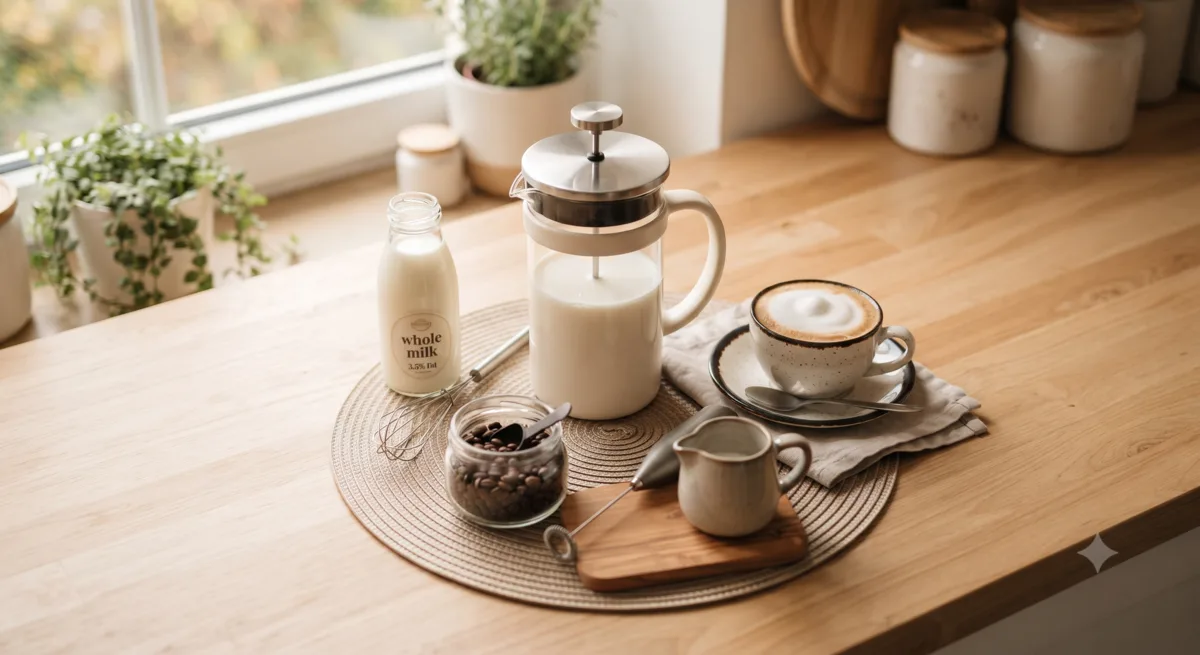
No, but it helps significantly. Without a frother, shake cold milk in a sealed jar for 45-60 seconds then microwave for 30 seconds. Or whisk vigorously by hand for 90 seconds. A handheld battery frother costs about $8-10 and makes the whole process take 20 seconds instead of 90, which is worth it if you make lattes regularly.

Written by
Jack Shi
Jack Shi is an independent developer and the founder of CLOOMS, where he builds focused tools and web utilities — including Home Cafe Lab. He tests every recipe and guide in a real home kitchen, and his guiding principle is simple: find a real, specific need and solve it as plainly as possible.
View profile →Make these next
Get the Home Cafe Ratio Sheet
Every core ratio — cold foam, cold brew, latte, matcha, syrup — on one printable page. Free. No email needed, just print it.
Open the free ratio sheet →